
NCFA Response to the Department of State Annual Report on Intercountry Adoption (Covering FY24)
US Intercountry Adoption System Is Failing Children and Violates the Purpose of the Convention and IAA
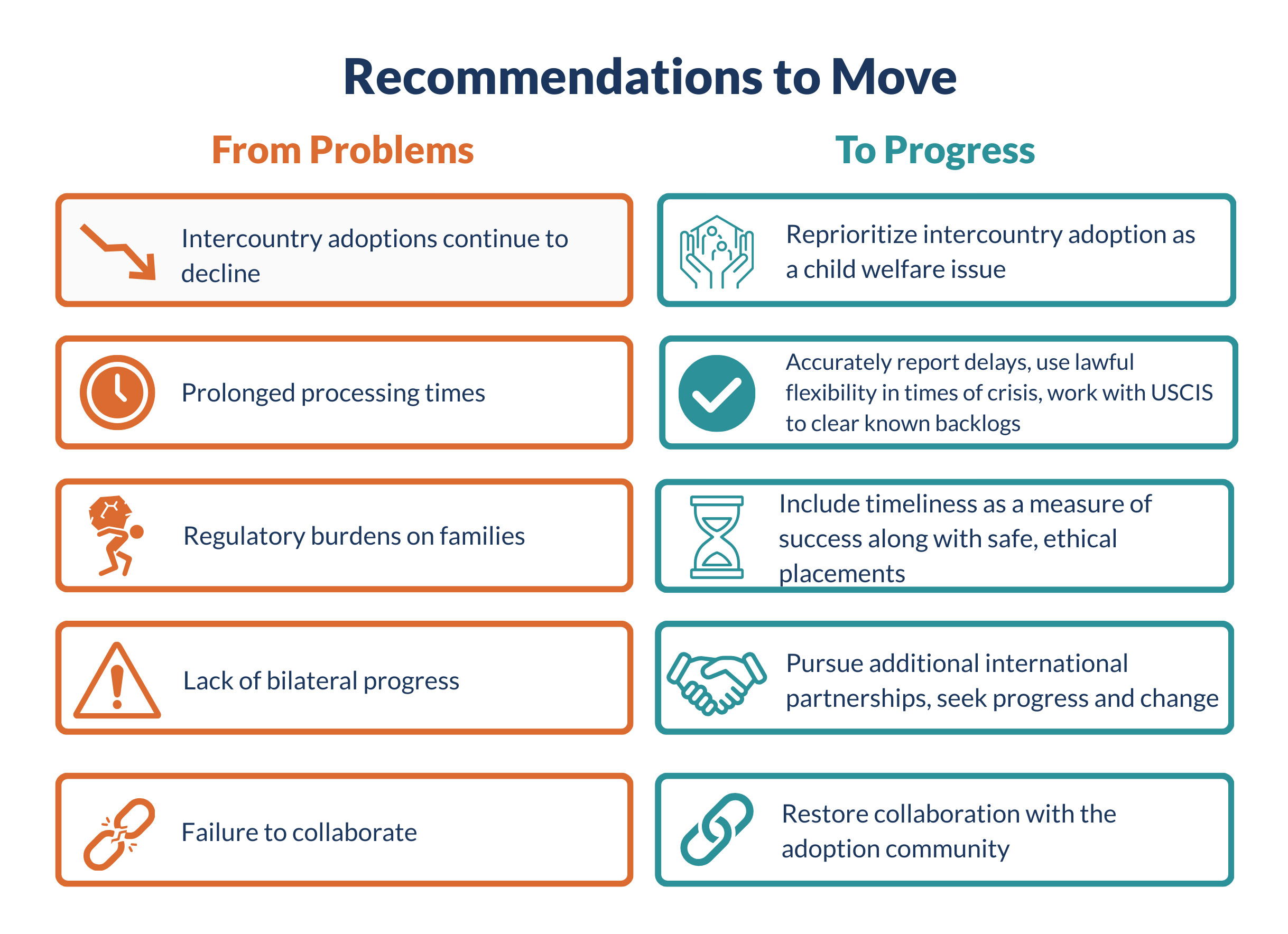
Summary: The Department of State’s FY2024 Annual Report on Intercountry Adoption confirms another year of decline. The report highlights travel, workshops and trainings, and new regulations intended to improve transparency; it does not, however, address the continuous decline in adoptions with fewer children being placed in families and unconscionably protracted wait times for families in process. The Department of State’s report does not acknowledge, resolve, or offer solution or comment on their or USCIS’s prominent contribution to this dramatic reduction. The Department of State often commingles its duty to facilitate intercountry adoptions with their duty to ensure and address child abduction matters. Intercountry adoption has not been prioritized, which is evident in the declining numbers of children adopted. This is critically failing to serve American citizens and help orphaned children find permanent families. In light of the Department of State’s failure, Congress and the Administration must treat intercountry adoption as a child-welfare priority and reverse course.
The numbers indicate a continued steady decline
- Total placements: 1,172 in FY2024, versus 1,275 in FY2023 (–8%). This is part of a larger downward trend of 95+% since 2004 (~23,000).
- Top countries of origin (FY2024): India (202), Colombia (200), Bulgaria (79), Taiwan (74), and South Korea (52). Haiti (51), Nigeria (44), the Philippines (39), Thailand (31), Mexico (25), and China (24) followed.

As with previous reports, this year’s report lists processing times by country in Table 4; however, these continue to be misleading data points to policymakers and families in the process because it only accounts for the time it takes to receive a visa from the filing of the I-800A, which is already prolonged for many of the Convention countries. Therefore, the report does not reflect the actual time it takes to complete an adoption.
Bilateral partnerships are not being formed because of ineffective engagement and outreach by the Department
There is no evidence that the Department of State has helped create or strengthen meaningful bilateral relationships with other countries regarding adoption. The report indicates that throughout this fiscal year the Department has engaged with very few new countries to provide technical assistance with no certainty of implementing intercountry adoptions. The Department also engaged with only a handful of countries which have established intercountry adoptions with the U.S. "to strengthen existing relationships,” with no indication of success on progress or change. A total of nine countries were reported to have been engaged by the Department out of more than 30 Convention countries listed on Table 1 of the report.
- China: The August 2024 announcement about China’s decision to end intercountry adoption (with limited exceptions for some relatives) froze hundreds of matched cases in place.
- Haiti’s instability slowed cases—but more than 50 children were still united with families in FY24. What the report doesn’t say is that many children could have been with their families sooner had the Department of State utilized its legal tools to better serve children and families. The Department claims that adoptions from Haiti “remained viable throughout 2024.” Adoption agencies and Haitian adoption authorities view this differently than the Department of State, noting that there were numerous shutdowns, stoppages, and closures of U.S. government offices, resulting in many times when adoption processing was not possible.
- Regulatory changes: The Department finalized revisions to 22 CFR Part 96 (effective Jan. 8, 2025) aimed at transparency, relative adoptions, and financial safeguards. The additional regulations will make adoptions even more expensive and lengthy. Rulemaking is not a valid measure of success; rather, success should be measured by whether more children in need of families are able to find permanent families in a safe, ethical, and expeditious manner. By that measure, the Department of State has failed, once again, in its role as Central Authority.
The Department is not focused on working collaboratively to solve and resolve issues related to intercountry adoption
The U.S. intercountry adoption system is failing the very children it is designed to serve and protect. The U.S. Department of State has been the Central Authority overseeing intercountry adoption since April 1, 2008, yet it cannot point to meaningful accomplishments or proactive solutions. It’s hard not to think the Office of Children’s Issues has a hostile view towards intercountry adoption agencies and the practice of intercountry adoption. Since 2017, when the last in-person Adoption Symposium took place, the Department has made no effort to work together with the accredited agencies or organizations such as NCFA, to address and find solutions for continued delays and declines. In fact, the Department rescinded invitations to participate in conferences and panels which bring the adoption professionals together, instead offering community calls to provide updates and information, and avoiding collaboration.
Conclusion
The FY2024 report documents another year in which too few children were served. The Department of State continues to perpetuate a system that results in fewer, slower, and more costly adoptions, all the while hundreds of thousands of children in orphanages are spending their childhood without a family. This should be unacceptable to all.
If the Department of State worked collaboratively with the adoption community, worked with USCIS to clear known backlogs, utilized lawful flexibility in times of crisis, and ensured that oversight coexists with speed, it could help turn around our broken system.